
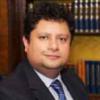
Mr Keyoumars Ashkan, Consultant Neurosurgeon

King's College Hospital, The Harley Street Clinic

Mr Ashkan was appointed as a consultant neurosurgeon at King's College Hospital in January 2007. He is also a Reader at King’s College London and a consultant at the London Neurosurgery Partnership, Harley Street Clinic.

In addition to his expertise in degenerative spine disease, which includes the management of back and neck pain, arm pain and sciaticaPain that radiates along the sciatic nerve, which is the main nerve in each leg and the largest nerve in the body. together with peripheral nerveBundle of fibres that carries information in the form of electrical impulses. disorders such as carpal tunnel syndromeNumbness, tingling, and pain in the thumb, index finger and middle fingers caused by a compression of the median nerve at the wrist.; Mr Ashkan’s main interests are neuromodulation surgery and brain tumours. This includes deep brain stimulation, spinal cord stimulation and occipital nerve stimulation for movement disorders, pain and headaches and; image guided, minimally invasive and stereotactic surgery for brain tumours including awake craniotomies; Gamma Knife® and CyberKnife radiosurgery. All patients referred for neuromodulation therapy, undergo a full multidisciplinaryRelating to a group of healthcare professionals with different areas of specialisation. evaluation to assess suitability and optimisation before surgery.


Mr Ashkan underwent dual postgraduate training in surgery and medicine, obtaining Membership of the Royal College of Physicians (MRCP) in 1997 and the Fellowships of the Royal College of Surgeons of England and Glasgow (FRCS) in 1998. Thereafter, he underwent higher specialist training in general neurosurgery in London being awarded the Fellowship of the Royal College of Surgeons in Neurosurgery (FRCS SN) in 2002. His sub-specialist training in stereotactic and functional neurosurgery included a fellowship in France with Prof Benabid, generally considered as the founder of the modern deep brain stimulation surgery, which led to an MD degree. 

Articles: 
  • Neuromodulation FAQs

    By Contact
    King's College Hospital, The Harley Street Clinic

    Neuromodulation essentially involves the use of electricity, delivered into specific parts of the brain, spine or the nervesBundles of fibres that carry information in the form of electrical impulses. to change their function. Through using electricity to change the functions of the body neuromodulation can be used to treat a whole spectrum of medical conditions.

  • What is neuromodulation?

    By Contact
    King's College Hospital, The Harley Street Clinic

    Neuromodulation is one of the most exciting emerging techniques in neurosurgery. It essentially involves the use of electricity, delivered into specific parts of the brain, spine or the nervesBundles of fibres that carry information in the form of electrical impulses. to change their function and treat a whole spectrum of medical conditions. Unlike the traditional concept of surgery which involves making changes to the structure of the body to treat disease, neuromodulation acts to change the function.

Continuous improvement requires feedback and your opinions count. Do you have a few minutes to tell us what you think about this site?

Yes
No